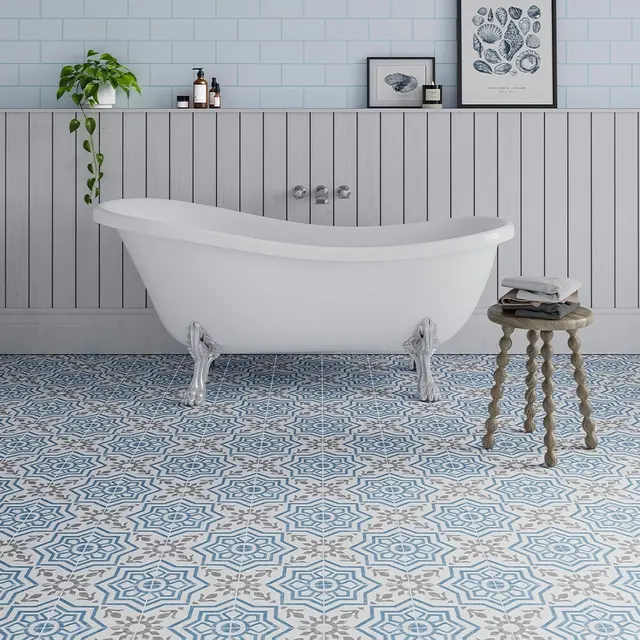
Patterned Floor Tiles

Patterned floor tiles are a great way to add some personality to just about any room. From bringing life to the patio to providing elegance for the bathroom, our contemporary patterned flooring range is sure to have something you’ll love.Patterned floor tiles are a great way to add some personality to just about any room. From bringing life to the patio to providing elegance for the bathroom, our contemporary patterned flooring range is sure to have something you’ll love.

Filters

£
£
15% Off

£304.22£357.96/ m²

In Stock
15% Off

£304.22£357.96/ m²

In Stock
15% Off

£266.00£312.95/ m²

In Stock
15% Off

£362.83£426.93/ m²

In Stock
15% Off

£362.83£426.93/ m²

In Stock
15% Off

£304.91£358.77/ m²

In Stock
15% Off

£304.91£358.77/ m²

In Stock
15% Off

£288.02£338.89/ m²

In Stock
15% Off

£288.02£338.89/ m²

In Stock
15% Off

£17.79£20.93

In Stock
15% Off

£15.76£18.55

In Stock
15% Off

£15.76£18.55

In Stock
15% Off

£25.19£29.71/ m²

In Stock
15% Off

£25.19£29.71/ m²

In Stock
Exclusive

£55.36/ m²

In Stock
Exclusive

£55.36/ m²

In Stock
Exclusive

£55.36/ m²

In Stock
Exclusive

£63.46/ m²

In Stock
Exclusive

£63.46/ m²

In Stock
Exclusive

£63.46/ m²

In Stock
Get The Look For Less
Victoria Black Tile (33cm x 33cm)

*More options available

£27.92/ m²

In Stock
Get The Look For Less
Victoria Grey Tile (33cm x 33cm)

*More options available

£27.92/ m²

In Stock
Exclusive
Statements™ Stello™ Black

*More options available

£50.46/ m²

In Stock
Exclusive
Statements™ Stello™ White

*More options available

£50.46/ m²

In Stock
Exclusive
Get The Look For Less

£29.50/ m²

In Stock
Get The Look For Less
Florrial Blue Tile (20cm x 20cm)

*More options available

£29.50/ m²

In Stock
Get The Look For Less

£29.50/ m²

In Stock
Exclusive
Exclusive
Exclusive

£45.98/ m²

In Stock
Exclusive

Viewing 32 of 32

HomeFloor Tiles

Floor Tiles

Our floor tiles give you a lot of freedom with size and layout, so it’s worth picturing how the whole room will come together before you make your choice. Hallways are a lovely place to start, as they’re often the first thing anyone sees, and a black and white chequerboard laid on the diagonal gives even a narrow entryway a grand, welcoming feel, while a plain matt square floor tile in a straight grid keeps things calm and simple. Larger tiles look beautiful in kitchens and open-plan spaces, and our large-format floor tiles really come into their own here, especially in a marble effect, because with fewer grout lines and more of each tile on show, the veining can flow right across the room. If you’d love the cosiness of a wooden floor in a kitchen or living room, our wood effect floor tiles give you all that warmth, or for something a little softer underfoot, our luxury vinyl tiles come in lots of realistic wood looks too. A speckled terrazzo is a fun little surprise in a utility room or downstairs loo.

Once you’ve settled on a look, it’s worth thinking about how the floor will be lived on day to day. Real natural stone has beautiful variation, but it’s porous, so it needs sealing and pH-neutral cleaners to keep it looking its best, whereas porcelain is non-porous, so spills stay on the surface and wipe straight off, which is a big part of why our stone effect floor tiles are so popular in busy homes. For glazed tiles on a well-used floor, the PEI rating tells you how well the glaze will stand up to everyday wear, and in kitchens, bathrooms and utility rooms, grip matters too. A matt or textured finish doesn’t automatically mean a less slippery floor, so it’s always worth checking a tile’s tested slip rating, and as we test our tiles’ slip resistance in-house, you can feel confident in the numbers you see, with our slip resistance guide explaining what they mean. Once you’ve found a floor you love, it doesn’t have to stop at the back door either, as some designs come in an outdoor version too, and our blog on blending indoor and outdoor living is full of ideas.

How Do I Pick The Right Floor Tile Pattern For My Room Size? ▾
Choose a pattern that suits the size and shape of the room. In small and medium rooms, herringbone, diagonal or large-format offset layouts with a matching grout help draw the eye out towards the walls, so the floor feels less broken up. Larger rooms and open-plan spaces can easily take bolder, repeating designs such as a high-contrast chequerboard, basketweave or Victorian geometric pattern without feeling busy. In narrow hallways and galley kitchens, lay planks or brick-bond tiles parallel to the longest wall to make the space feel longer.
What Are The Best Floor Tiles For High-Moisture Areas Like Bathrooms and Kitchens? ▾
Porcelain floor tiles are a popular choice for bathrooms and kitchens, as they’re dense with very low water absorption, and spills stay on the surface so they’re easy to wipe away. For grip, check each tile’s tested slip rating, not just its finish, as a matt or textured surface doesn’t automatically mean more slip resistance, and many ratings are based on wearing shoes, not bare feet. Tiles aren’t waterproof on their own, so for showers and wet rooms, we recommend waterproofing the area underneath first. Marble and terrazzo effect porcelain give you the same easy care with a more decorative look.
Which Floor Tile Materials Are The Most Durable And Scratch Resistant? ▾
Porcelain generally comes out on top here. Kiln-fired at high temperatures, it's denser, harder and less porous than standard ceramic, which is why it holds up well under regular wear. For heavy-traffic areas like busy hallways, kitchens or family spaces, through-body or unglazed porcelain offers extra durability, since the colour runs all the way through the tile, so minor scuffs or chips won't reveal a different material underneath.

For glazed tiles, look for a PEI rating of 3 or above for everyday domestic use, or PEI 4 if the area gets particularly busy. See our guide to PEI ratings for the full scale.

High-grade natural stones like granite or slate also offer excellent strength, though they need a little more care than porcelain.
What Is A PEI Rating On A Floor Tile? ▾
A PEI rating measures how well a tile's surface holds up to wear from foot traffic over time, tested independently on a scale of 0 to 5. It applies to glazed porcelain and glazed ceramic tiles, not unglazed tiles or natural stone. For most domestic floors, PEI 3 is a good practical minimum, stepping up to PEI 4 for busier areas like hallways or homes with pets.

See our porcelain floor tiles guide for the full breakdown of what each rating means.
Can Floor Tiles Be Installed Over Underfloor Heating? ▾
Yes. Ceramic, porcelain and natural stone are all good conductors of heat, so they warm up efficiently and tend to hold that warmth for a while after the system switches off. They work well with both electric underfloor heating systems and water-based systems, though compatibility still depends on the specific tile, the adhesive used and the manufacturer's guidance for that system.

See our guide on choosing an underfloor heating system for more detail on getting the right setup.
Can Floor Tiles Be Used On Walls? ▾
Often, yes, though it depends on the range. Floor tiles tend to be thicker and heavier than wall tiles, so they can usually handle being fixed to a wall, but larger or heavier formats may need a stronger adhesive or extra support, particularly on stud walls. It's worth checking the individual product specification to see if it's suitable for wall use before you buy.

When a tile does work on both, it opens up a seamless look, carrying the same tile from floor to wall with no visual break, which works particularly well in bathrooms and wet rooms.

It doesn't tend to work the other way round. Wall tiles are generally thinner and not built to withstand foot traffic, so they're not a suitable substitute for a floor.
How Do I Clean And Maintain Floor Tiles? ▾
Porcelain and ceramic floor tiles take very little effort to keep clean. A quick sweep followed by a mop using a pH-neutral cleaner (such as Fila Multi Surface Cleaner) is usually all they need. How often you mop comes down to daily footfall, so busy family kitchens and hallways might need a go-over every few days, whereas quieter rooms can easily go a couple of weeks between cleans.

Natural stone takes a bit more care. It should be sealed following the guidance for your chosen stone, as the timing can vary between materials, then checked regularly and resealed when needed, depending on how much wear the floor sees. Stick to a dedicated natural stone cleaner from our cleaning and maintenance range so you don’t strip away the protective layer or dull the surface.

For specific product recommendations and advice on keeping your grout lines fresh, take a look at our guide to cleaning tiles and grout.
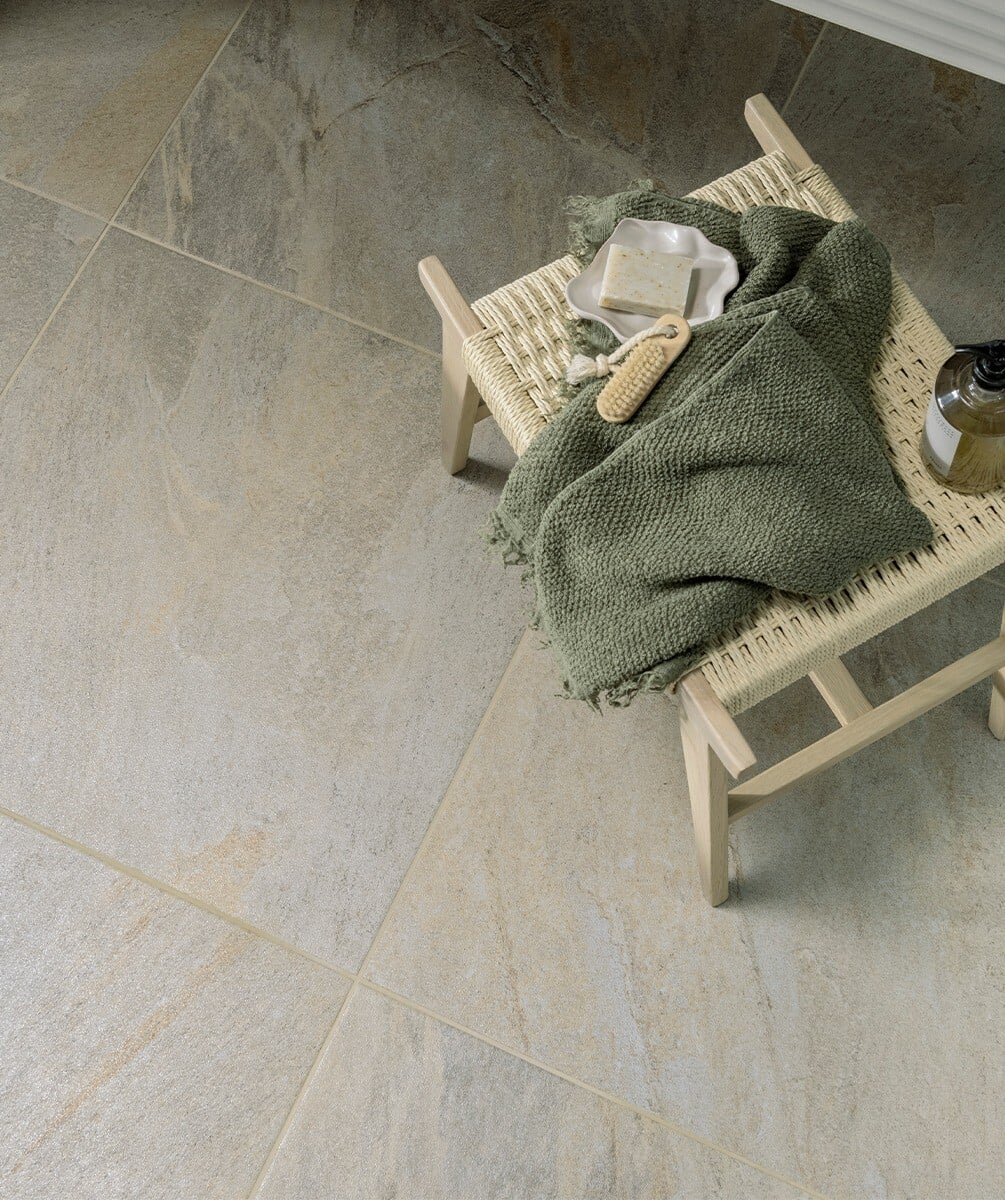
Opalia Green Floor Tiles